
Loading promotion info...
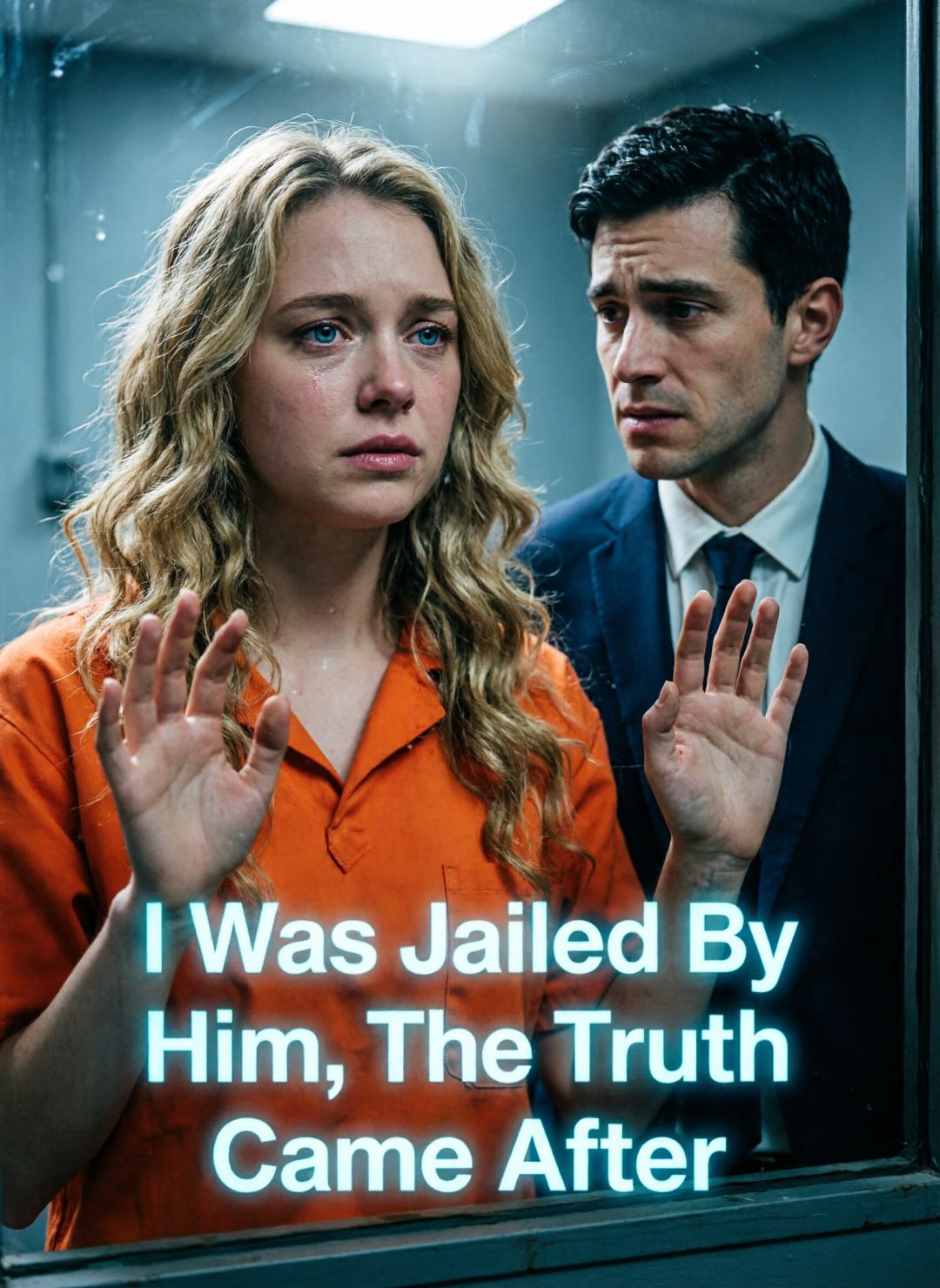
I Was Jailed By Him, The Truth Came After
 NovelMaster
new
Completed
The day I walked out of prison, a doctor told me the cancer had spread and left me six weeks. I didn't go looking for Noah. I booked a place on an artificial reef sunk off Orison Point instead. When I was seventeen, he took me to the top of the lighthouse and said we would get married there one day. The fog was thick that night. The beam swept the water every twenty seconds. He held my hand and told me that if I ever got lost at sea, he would keep the light burning for me. Then his younger sister, Sophie Grant, died in a regatta after someone switched off the storm alert. I signed a confession, swallowed all the blame for the Grant family, and he sent me to prison himself. To pay off the balance on my sea burial, I took a night restoration job at the old lighthouse hotel, and ended up on the crew for his engagement party with his new fiancee. He made me restore Sophie's things, let people search my room, and refused to have my report reviewed when I found a fault in the seawall. The night the storm surge came ashore, I cut the power to the party and called for an evacuation. He had me locked in a maintenance room. A little over ten seconds later, the main ballroom collapsed in front of two hundred guests. I crawled out through an air duct and pulled him out. My pill bottle rolled to his feet, and he finally saw the burial contract I had already signed. But this time the alarm, the truth, and the love all came too late. He started digging into the old accident and found out I hadn't shut off the alert. His mother had forced my confession with a charge that did not exist. Leah had seen the key work order years ago. Noah resigned as chairman, gave the police his own statement, and wanted to spend the rest of his life buying back four years. All I asked was that he clear my name, so Sophie would no longer be memorialized through a family lie. It was drizzling in Vesper Bay the day I came out of the state women's prison. The parole officer handed me a clear plastic envelope. Inside were an expired driver's license, twelve dollars in cash, and a coastal map creased white along the folds. Four years ago, on the day I went in, I had drawn a circle on Orison Point. The rain had bled through it now. The edges were soft and blurred, like a grave nobody had come to claim. I didn't look for a place to stay. I went straight to the hospice center on the north side of the bay. Dr. Joanna Ellis slid the results across the desk without softening them with the usual careful phrases. "It's spread. Liver and bone. Treatment can ease the symptoms, but it won't change the outcome. Erin, you have about six weeks." I looked down at the shadows on the scan. "Is six weeks enough to arrange a sea burial?" Joanna was quiet for a few seconds before she wrote down the number for the reef burial service. Vesper Bay doesn't allow ashes to be scattered freely. After cremation they get mixed into a nontoxic reef block and sunk in the protected water off Orison Point. There are no headstones out there. Only a tide coordinate. When I was seventeen, Noah took me to the top of the old lighthouse and said we would get married there one day. The fog was heavy that night. The beam swept the water every twenty seconds. He held my hand and told me that if I ever got lost at sea, he would keep the light burning for me. I believed it for years. During my second year inside, the lighthouse hotel closed after running into financial trouble. The papers said the Grant Foundation was going to turn it into a high-end wedding venue. I cut out the clipping and pressed it into a woodworking safety manual. A cellmate asked if I wanted to get married there. I said no. I was just afraid that one day I wouldn't be able to remember what the sea looked like. Later, when the pain started, I memorized every wave line on the back of that clipping. In a hospital wing with no windows, it was the only place I could go and be quiet. The deposit cost far more than the money I walked out with. Joanna put me in touch with the restoration project at the lighthouse hotel. The Grant Coastal Rescue Foundation had bought the old building and was preparing to reopen it. The night shift needed someone who knew carpentry and mural repair. "Do they know about my record?" I asked. "The contractor does. He says your skill is all that matters." I had repaired furniture in the prison workshop for four years. My fingers were rougher than they used to be, but at least I still had a skill I could sell. At seven that evening I carried my toolbox into the old lighthouse hotel. The lobby floor had been stripped down to the joists, and the air was thick with damp wood and lime. The project manager, Dale Foster, handed me a hard hat and was about to walk me through the work zones when footsteps came from the door. Noah Grant walked in, and every hand in the room stopped. Four years, and he was thinner than I remembered. Rain darkened the shoulders of his black coat, and the look under his brow had frozen over. Leah Moore came in on his arm, the blue diamond on her left ring finger impossible to miss. Leah used to be my closest friend. After Sophie, she held me in the courthouse hallway and told me that if I just admitted it, Noah would forgive me someday. Before Dale could open his mouth, Noah had already seen me. "Who let her in here?" "Mr. Grant, she's the new restoration hire. All the paperwork cleared." Noah glanced at the electronic parole band on my wrist, then at the name tag on my toolbox. "Is there nobody left in Vesper Bay?" I tightened my grip on the handle. "If you don't want me here, I'll go now." I couldn't afford the penalty for breaking the contract, but I wasn't going to let him watch me beg. Leah tugged lightly at his sleeve. "Noah, don't. Erin has served her time." She said it gently, but her eyes went to my shoes, as if she were checking whether the mud had reached her hem. Noah came close enough that I could smell the faint cedar on him. There was a time I could have picked that scent out with my eyes shut. Now it only reminded me of the day the verdict came down, when he stood on the witness stand and said I had shut off the storm alert and killed Sophie. "Stay," he said. I looked up. "Sophie's memorial hall is short-staffed." His voice was flat. "Since you need this job so badly, you can restore everything she left behind, piece by piece, yourself. At least then you'll remember every day whose life you owe." The dull ache spread through my chest. I slid my hand into my pocket and pressed down on the pill bottle so he wouldn't see it. "Fine. Just pay what the contract says." For a second the anger in his eyes was sharper than the contempt. Maybe he wanted me to cry, wanted me to explain, wanted me to grab his sleeve the way I had four years ago. But I had six weeks, and no time left to prove how much I hurt to a man who had chosen not to listen.Sophie's memorial hall was in the hotel's west wing, its windows facing the stretch of water where she disappeared. Trophies, old photographs and rescue lines filled an entire wall. In the middle sat a white training dinghy with the blue whale Sophie had painted on the hull herself. Four years ago, at that charity regatta, this was where she went into the water. I pulled on gloves, numbered every item, and photographed each one before restoration. Sophie's brass compass sat in a glass case with a line engraved on the back. Always trust the alarm. That wasn't a slogan the foundation came up with later. She cut it in herself at fifteen. Back then she was sick of her mother rewriting the training schedule for donors, so I gave her that old compass and told her to trust the instrument first when things got dangerous, not some adult's reputation. It never occurred to me that in the end what killed her would be a storm alert somebody had switched off. That morning the board came through for an inspection. A longtime director named Carlton Webb saw me and deliberately stopped in the doorway. "This is the one who cut the alarm?" he asked Noah. "You put her next to Sophie's things and you're not afraid she'll wreck them all over again?" A few people laughed under their breath. I didn't look up. I kept working the soft brush around the base of a trophy. Noah stood six feet away and did nothing to stop them. He only told Dale, "Every valuable in this room gets counted twice a day. Anything she touches, log it." Carlton decided that wasn't enough and kicked the toolbox at my feet. "I hear they teach carpentry in prison too. So the Grant Foundation is handing out charity to killers now?" The box hit the wall and the carving knives went everywhere. I crouched down to pick them up. The finest one rolled to Noah's shoe. He set his foot on it, waited until I reached for it, then slowly moved aside. "Mr. Webb," I said, standing up, "the state court convicted me of reckless endangerment and negligent homicide. Not murder. If you want to humiliate me, at least get the charge right." The hall went silent. Carlton's face darkened. "You still think you got a raw deal?" "I only want every plaque in this room to say what actually happened." Noah's eyes locked on mine. "What actually happened is that Sophie is dead and you signed a confession." "Yes," I said. "Which is why I never asked you to believe anything else." His jaw tightened, as though my calm admission offended him more than a denial would have. After the inspection he had Dale bring my contract over. The night differential was gone, and my scope had widened from the memorial hall to the entire west wing. I read the added clause. If I quit, I owed eighteen thousand dollars in training and security costs. "That wasn't in the original contract." "The original contract didn't say a contractor could hide who he was hiring, either." Noah set a pen down in front of me. "Sign it or leave. I'll give your parole officer a full report, including the fact that you didn't disclose your relationship to the victim's family when you applied." He knew that might not actually violate my parole. More importantly, he knew I couldn't survive any investigation that stopped my work. I did the math on the reef balance and signed. "So you'll do anything for money now?" he asked. "Not anything." I put the contract away. "Only what's written on paper." The night I finished, I found a vertical crack in the west wing's outer wall. Fresh salt crystals had bloomed along the edges, which meant seawater was working its way out through the load-bearing wall. I photographed it, marked the location, and wrote in the site log that the west wing should be closed during any storm surge and that the old flood gate and the hand-crank winch needed review. Before I left I stood by the water and called the reef service, and wired them my entire first week of wages. "Ms. Ward, the balance is due within three weeks. Are you certain there's no family member handling this with you?" I watched the lighthouse beam pass over the black water. "No family." Saying it felt lighter than hearing the doctor give me six weeks. On the walk back to the dorm, my parole officer called for his routine check-in. He reminded me not to leave the county without permission or come into conflict with the victim's family. I told him honestly that I was working on a Grant project. Officer Doyle went quiet for two seconds and asked if I was sure. "The contract is signed." "If they use your parole status as leverage, keep it in writing." I touched the added clause in my pocket. Four years ago I thought silence could protect people. Now I understood at least this much. Every line on paper can decide who gets to be believed.The brass compass was gone by the third morning. When I got to the memorial hall, the case was standing open with nothing inside but a square of faded velvet. Leah was waiting in the doorway with Vaughn Mercer, the head of security, as if she had come specifically for this. "You were the last person out of this room last night," she said. I set down my toolbox. "I photographed the case before closing. The compass was in it. The door logs will show who came in after me." Vaughn opened my toolbox. The compass was in the bottom tray, wrapped in a silver polishing cloth. Every eye in the room dropped to it at once. Leah drew a soft breath, her voice barely there. "Erin, if you needed money you could have told me. Why did it have to be something of Sophie's?" "I didn't put it there." Noah came down the corridor. Vaughn handed him the compass, and he turned it over and over for a long time, his thumb moving again and again across the engraving on the back. I pulled up the photo on my phone. "Nine seventeen last night, the compass was still in the case. The photo uploads to the project cloud automatically, so the timestamp can't be edited. My badge shows me leaving at nine twenty-three. After that, an administrative card opened this door." Noah didn't take the phone. "You did metal restoration in the prison workshop. You know how to take a lock apart. You know how to edit photo data too." "The cloud back end can verify the original file." "Enough." He put the compass back in the case. "Search her room." The staff dorm was barely a hundred square feet. Two security men flipped the mattress and emptied the drawers. Painkillers, my diagnosis papers and my underwear all ended up on the floor together. I bent to pick up the diagnosis, and Leah's shoe came down on the corner of the page first. "What is this?" I pulled the paper back, folded it, and put it in my pocket. "Nothing to do with the project." Noah stood in the doorway. He didn't come in and he didn't stop it. All he said was, "From today she doesn't touch any of the artifacts alone. Tools go into the cage every night. She gets checked before she leaves the site." "You could call the police," I said, looking at him. "If you really believe I stole it, let them pull the door logs, the prints and the cloud records." He was silent for a beat. And then I understood. He didn't need the truth. He only needed a version of events that let him go on hating me. Calling the police would mean verification, and verification might overturn everything. One of the guards dragged an old tin box out from under the bed. There was no jewelry in it. Only three postcards Sophie had sent me and a length of broken blue sail line. Leah picked up the postcards and asked why I was keeping the victim's things. "Because she sent them to me." "If she knew you killed her, would she still want you to have them?" I put my hand out. "Put them back." Noah finally moved. He took the postcards out of Leah's hand, and instead of giving them to me, he read them one by one. The top card said, "Once I win the junior title, I'll be your bridesmaid when you marry my brother." His thumb stopped on the word bridesmaid. Then he put the postcards back in the tin. "Keep searching," he said. That made his choice clearer than if he had crushed the box underfoot. He had already chosen. Leah said gently, "Let's not make this bigger than it needs to be. Erin just got out. A record won't do her any good." She made pity sound like a gift. I didn't argue anymore. That evening I collected my first payment and went to the reef service to clear the balance. The contract said that if I died, Dr. Joanna Ellis would confirm my identity and my ashes would be interred in protected waters three nautical miles northeast of Orison Point. My hand shook badly as I signed. The clerk thought I was frightened and brought me a cup of warm water. It was only the pain. The cancer had started spreading into my bones, and the painkillers worked for shorter and shorter stretches. Back at the lighthouse, I kept inspecting the west wing. The crack in the outer wall was only part of it. Under the old main hall sat a nineteenth-century hand-crank winch used to raise the flood gate during storm surges, and nearly a third of its steel cable had already frayed through. Under load, it could snap. I put the photographs, the load estimates and my recommendation to take it out of service into a report, and copied it to Dale, the foundation's safety committee, and Noah. The upload went through, and a status line flashed on-screen: Received by the Office of the Chairman. I stared at that line for two seconds and shut the computer. This time I had put the alarm right in front of him. Whether he listened was no longer mine to carry.There was a star chart on the top floor of the lighthouse, painted by Noah and me when we were twenty. The hotel still belonged to his grandfather then. We waited until the caretaker went home, hauled paint up the stairs, and put the summer constellations of Orison Point across the curved wall. Beside the North Star Noah wrote two very small letters. E and N. He said we wouldn't need flowers on our wedding day. The lighthouse being lit would be enough. Now Leah's engagement party was going to be held there. The designer thought the star chart looked dated, so Noah handed me the sander. "Take it off. Leah wants this wall white." I put on my goggles. "The whole thing?" "Including those two letters." The machine started and the blue paint came down as fine dust. I didn't stop. The North Star went first, then Cassiopeia, and last of all those two crooked letters. Noah stayed in the doorway the whole time. When half the E was gone, he suddenly said, "You have nothing to say?" I shut the sander off and waited for the noise to die away. "I do. You can't hold a party in the west wing. I sent you the safety report yesterday. The cable and the seawall both need review." His face went cold. "That isn't what I asked." "Then I have nothing else." He turned and knocked over a paint bucket. White spread across the floor. He didn't look back. That afternoon the weather service raised the storm surge warning from yellow to orange. Dale said they had invited two hundred donors to the engagement party and opening ceremony, and postponing would cost more than a million dollars. I went to Noah's office. Leah was sitting on the edge of his desk checking the guest list, and she smiled when she saw the printed report in my hand. "The west wing again?" "The number of broken strands in the cable exceeds the allowable safety limit. When the tide comes in and the flood gate takes the load, it will scour the foundation under the main hall." Noah turned two pages. "When did you get your structural engineering license?" "I don't have one. That's why the report asks for review by someone who does. Until the results come back, close the west wing." Leah laid her hand flat on the report. "The engineering consultant is coming tomorrow. Tonight is only a small rehearsal. Nothing is going to happen." "By tomorrow the storm surge will already have made landfall." Noah looked at me. "You want me to cancel my engagement party?" "I don't want you gambling with two hundred lives over a broken cable." That sentence burned through the last of his patience. "Four years ago you said you understood safety too. Sophie followed your plan and never came back." My throat closed, but I didn't step back. "You have never once looked at the original log to see who shut that alarm off." The office went completely still. It was the first time in four years I had touched the edge of that truth. Leah's fingers visibly tightened, creasing the pages under her hand. Noah said, "Your confession spells it out. You shut off the alarm after an argument with Sophie. Who are you trying to pin it on now?" "The confession also says I entered the control room at one fifteen. But the west dock badge log shows that between one thirteen and one twenty-one I was bandaging an injured volunteer. All you ever had to do was put those two records side by side and you would have seen the times don't match." Leah answered immediately. "Somebody could have badged in for you." I looked at her. "Then pull the original footage instead of guessing in an office." Noah's eyes moved across her face. In that instant he did notice how fast she had answered. He pushed the doubt back down anyway. He looked at me. "You want to retract your confession?" "I'm reminding you that refusing to verify something isn't the same as reaching a conclusion." "Get out." I turned and went. Before the door shut I heard Leah say, "Don't let her rattle you. Manufacturing panic at the worst possible moment is what she's best at." That night the status of my report in the system changed from "Received" to "Archived: No Action Required." The handler field read "Office of the Chairman." I saved a screenshot to my personal email, then went to check the emergency lighting and the tunnel exits in the main hall. At one in the morning I tied a red warning band across the winch. The band snapped in the wind like a warning flag only I could see. On the back of the shift sheet I drew the emergency routes and circled the north stair, the old air duct and the manual brake. Dale didn't dare stop work officially, but he agreed to copy the drawing for the night crew. "And if something really does happen tomorrow night?" he asked quietly. "Kill the power first, then get people out of the west wing. Don't wait for the chairman to agree." "You know he'll blame me." "The structure doesn't change based on who the chairman is." He said he had two kids and couldn't lose the job. I didn't push him. I only slid a copy of the route map into the fire cabinet. Fear isn't the same thing as malice, but at a critical moment it can clear the way for danger just as surely.